
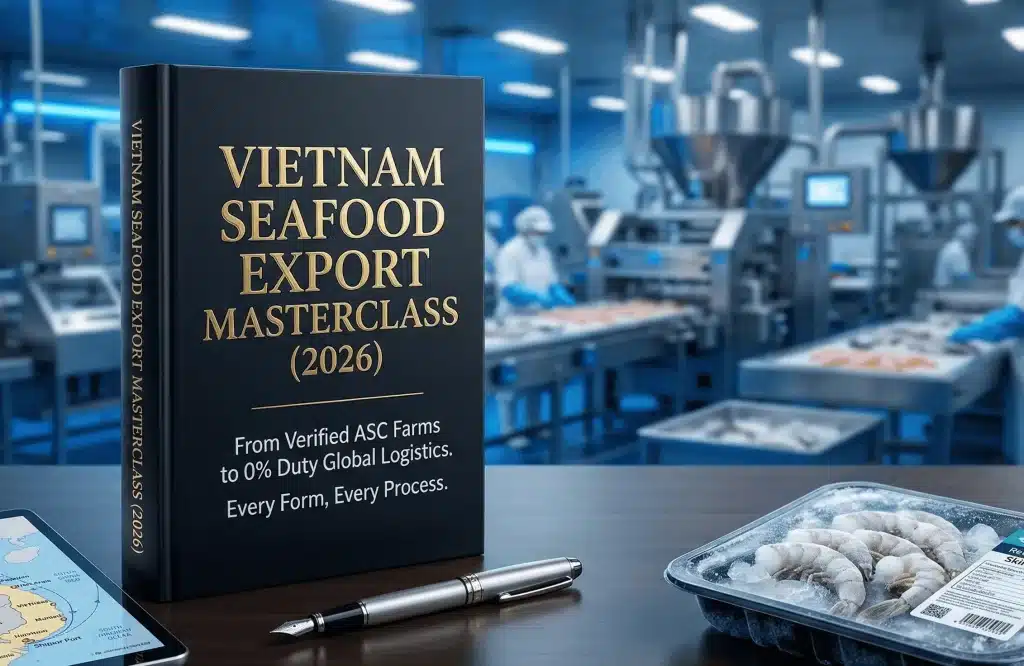
How to Import Seafood From Vietnam: What Buyers Should Check Before Choosing A Supplier
Importing Seafood From Vietnam: Key Points Buyers
For many importers, Vietnam remains one of the most reliable places to source seafood. The country has built a strong export industry based on modern processing plants, strict quality standards, and decades of experience shipping to global markets.
But importing seafood from Vietnam is not only about finding the lowest price. Buyers also need to check supplier reliability, export documents, product specifications, glazing, packing, certifications, and whether the factory can meet the target market’s requirements. This guide explains the main points buyers should check before choosing a seafood supplier in Vietnam.
1. Vietnam’s Seafood Export Industry
Vietnam has a strong seafood export industry, but buyers still need to check each supplier carefully. A factory can be experienced in export, but still not be the right fit for every product, market, or buyer requirement.
Over the past twenty years, Vietnam has invested heavily in aquaculture and seafood processing. Today the country operates hundreds of export facilities that meet international food safety standards. Many Vietnamese seafood processors operate under certifications such as HACCP, ASC, BAP, and BRCGS. These standards are widely recognized by retailers and foodservice distributors in Europe, North America, and Asia.
Importers looking for a seafood supplier in Vietnam usually benefit from three advantages:
Modern processing facilities: Many Vietnamese seafood factories are built for export production and operate with structured quality control systems. Capabilities vary by factory, so buyers should confirm the exact processing method, packing format, freezing method, and certifications before moving forward.
Experience with international markets: Vietnamese exporters regularly ship seafood to the United States, the European Union, Japan, and South Korea.
Value-added production: Vietnam has become especially strong in processed seafood products such as breaded shrimp and retail-ready frozen seafood.
2. Major Seafood Products: Technical Specifications
Vietnam exports a wide range of seafood products. Importers typically focus on several main categories.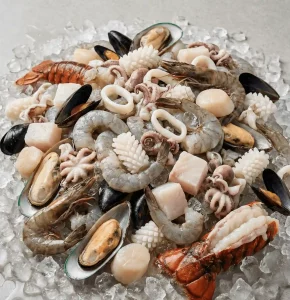
Shrimp (Vannamei & Black Tiger)
Frozen shrimp is Vietnam’s flagship export. Buyers choose between the fast-growing Vannamei (Whiteleg) or the premium, larger Black Tiger shrimp.
Product Forms: * HOSO: Head-on, Shell-on.
HLSO: Headless, Shell-on (Easy-peel options available).
PD / PDTO: Peeled & Deveined / Peeled & Deveined Tail-on.
Add-Value: Nobashi (stretched shrimp), breaded, and tempura styles.
Size Grading: Standardized by count per pound (e.g., 16/20, 21/25, 31/40) or count per kilogram for EU markets.
Buyer requirement: Some buyers may request additional animal welfare, sustainability, or processing controls depending on the product, market, and customer requirements. This should be checked case by case before quoting.
Pangasius (Catfish)
Often referred to as the most versatile whitefish in the world, Vietnamese Pangasius is a staple for foodservice and retail chains.
Product Forms: Skinless, boneless fillets are the standard. Common treatments include well-trimmed (fat and red meat removed) or semi-trimmed.
Color Grading: Fillets are graded by flesh color (White, Light Pink, or Light Yellow). White meat typically commands the highest premium in US and EU markets.
Size Grading: Fillets are sized by weight in grams (e.g., 120-170g, 170-220g, or 220g+).
Squid and Cuttlefish
Vietnam is a significant exporter of cephalopods, known for their tender texture and clean white color after processing.
Product Forms: Whole cleaned, skinless tubes, rings (blanched or raw), and tentacle-only packs.
Common Species: Loligo and Todarodes squid; Sepia cuttlefish.
Size Grading: Tubes are often sized by length in centimeters (e.g., 10-15cm, 15-20cm).
Tuna
Vietnam exports high-quality yellowfin and skipjack tuna, primarily focused on the canning and frozen steak markets.
Product Forms: Frozen loins (CO treated or non-CO), tuna steaks, and canned (in oil, brine, or spring water).
Buyer note: Tuna requirements can vary depending on species, origin, catching method, and destination market. Buyers should confirm the required documents before shipment, especially for regulated markets such as the EU and US.
3. Export Documents Buyers Should Check
Seafood shipments from Vietnam require clear export documents and market-specific compliance checks. The exact requirements depend on the product, destination country, buyer, and customs rules.
Most seafood shipments include standard documents: Commercial invoice, Packing list, Certificate of origin, Health certificate (NAFIQPM), and Bill of lading.
Importers must also ensure that their suppliers comply with destination market regulations. Important points to check include:
For US buyers: check duty status, supplier eligibility, and any species-specific requirements before shipment. Requirements can change, so this should be verified before confirming the order.(POR19 & MMPA)
For EU buyers: check the supplier’s EU approval status, health certificate process, certificate of origin, IUU-related documents where relevant, labeling, and the buyer’s own documentation requirements. Duty treatment depends on product, HS code, origin, and trade agreement rules.(EVFTA & IUU)
4. Frozen Seafood Processing Methods
Most seafood exported from Vietnam is shipped frozen to preserve freshness during long-haul transit.
IQF Freezing (Individually Quick Frozen): Each piece is frozen separately. Ideal for retail bags and portion control.
Block Frozen Products: Seafood frozen in solid blocks, typically used by re-processors, wholesalers, and foodservice buyers.
5. Choosing a Reliable Seafood Supplier
A reliable 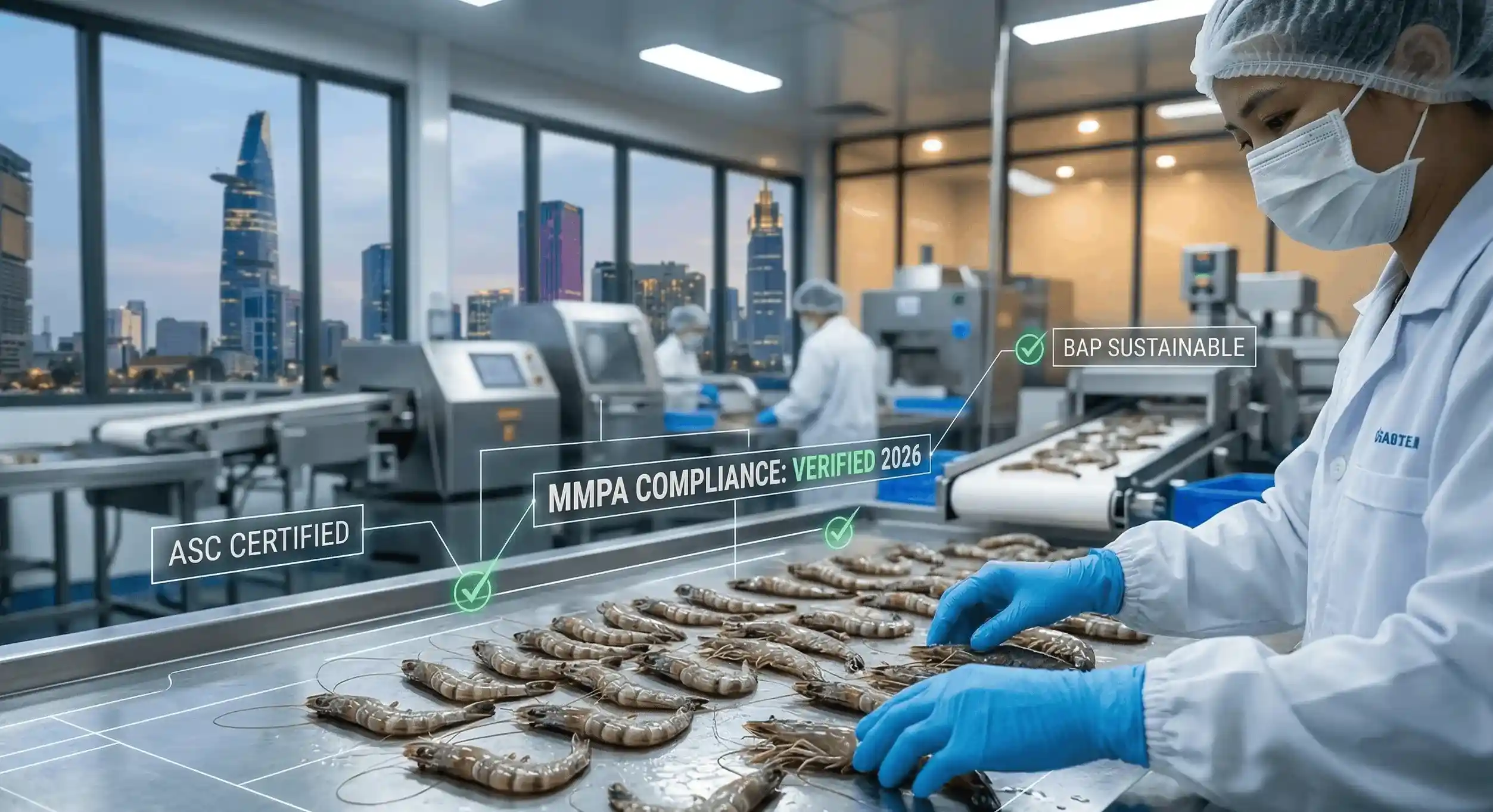 seafood supplier is not only the one with the lowest price. Buyers should check whether the supplier can meet the required specification, packing, documentation, certification, volume, and consistency over repeat orders. Things to look for:
Certifications: Active HACCP, ASC, BAP, or BRCGS standards.
Production capacity: Ability to supply required volumes consistently.
Clear product specifications: Confirm net weight versus glazing percentage (e.g., 20% glazing means 80% net weight).
6. Common Mistakes When Importing Seafood
Focusing only on price rather than total quality and compliance.
Not verifying supplier certifications or POR19 Separate Rate status.
Ignoring glazing percentages in frozen products (ensure you pay for fish, not water).
Failing to confirm the 2026 MMPA “Red Flag” list for wild-caught species.
7. Understanding the Real Cost
The real cost is not only the FOB or CIF price. Buyers also need to consider freight, duty, insurance, inspection, documentation, glazing, net weight, and the risk of delays or rejected documents.
Importers should consider ocean freight, insurance, and Customs duties—specifically the 4.28% POR19 duty for qualified US exporters. Choosing the right supplier reduces the risk of document problems, delays, wrong specifications, and unexpected costs after the order is already moving.
Building a Reliable Seafood Supply Chain
Vietnam has become one of the world’s most important seafood export hubs. Global Food Asia works from Vietnam to help buyers compare seafood suppliers, check product specifications, review export readiness, and coordinate the sourcing process from inquiry to shipment.
2026 Vietnam Seafood Sourcing: Frequently Asked Questions
What seafood products are commonly imported from Vietnam?
Vietnam is known for shrimp, pangasius, tuna, squid, cuttlefish, clams, mussels, and added-value seafood products such as breaded shrimp, marinated items, skewers, and ready-to-cook products.
What should buyers check before choosing a seafood supplier in Vietnam?
Buyers should check the supplier’s export experience, certifications, product specification, glazing percentage, net weight, packing format, health certificate process, certificate of origin, loading capacity, and ability to meet the target market’s requirements.
Which documents are usually needed for seafood exports from Vietnam?
Common documents include commercial invoice, packing list, bill of lading, health certificate, and certificate of origin. Depending on the product and destination market, additional documents may be required.
Are Vietnamese seafood suppliers suitable for European buyers?
Many Vietnamese seafood suppliers export to Europe, but buyers should still check each factory case by case. EU approval, documentation, labeling, certifications, and buyer-specific requirements should be confirmed before moving forward.
Why is glazing important in frozen seafood?
Glazing affects the real net weight of the product. Buyers should confirm the glazing percentage, net weight, gross weight, and whether the price is based on net weight or gross weight.
How can Global Food Asia support seafood sourcing from Vietnam?
Global Food Asia helps buyers compare suppliers, check product specifications, review export readiness, coordinate samples, and support the sourcing process from inquiry to shipment.