How to Import Frozen Fruits and Vegetables from Vietnam in 2026
Vietnam is a growing sourcing origin for IQF frozen fruits, tropical fruit purees, frozen vegetables, and selected value-added produce. For importers, the opportunity is not only price, but also product variety, raw material access, processing capability, and the ability to build alternative supply options in Asia.
Executive Summary: Importing Frozen Produce from Vietnam in 2026
For food importers, Vietnam can be a useful origin for selected frozen fruits and vegetables, especially tropical fruit products such as mango, pineapple, passion fruit, coconut, banana, dragon fruit, jackfruit, and durian.
Vietnam’s fruit and vegetable export sector reached record levels in 2025, showing continued demand for Vietnamese produce in global markets. However, buyers should remember that this includes fresh, frozen, processed, dried, and other product formats, not only frozen goods.
The main buyer advantage is not only low cost. It is the combination of raw material access, processing capacity, flexible packing options, and supplier diversity.
However, buyers should not treat every Vietnamese frozen produce supplier the same. Before confirming an order, it is important to check product specification, MRL compliance, packing format, freezing method, temperature control, documents, and export experience for the destination market.
1. Vietnam’s Frozen Fruit and Vegetable Export Industry
Why source frozen produce from Vietnam?
Vietnam’s tropical climate allows for year-round harvesting, but the real advantage lies in the recent surge of industrial IQF facilities. These factories are strategically located near raw material zones like the Mekong Delta and Central Highlands to ensure produce is processed within hours of harvest.
Infrastructure: Major investments in BRCGS and HACCP-certified facilities have made Vietnamese frozen food exporters compliant with strict EU, US, and Japanese standards.
Trade Advantage: Vietnam’s participation in global trade blocs provides significant tariff advantages, often reaching 0% for processed frozen goods.
Traceability: In 2026, the industry has adopted national digital traceability, allowing buyers to track batches back to specific planting area codes.
2. Main Frozen Fruit Products from Vietnam
IQF Frozen Mango
Vietnam can be a competitive source for IQF frozen mango, especially for diced mango, slices, halves, and puree. Buyers should confirm variety, Brix, cut size, color, defect tolerance, and drip loss after defrosting.
IQF Frozen Pineapple
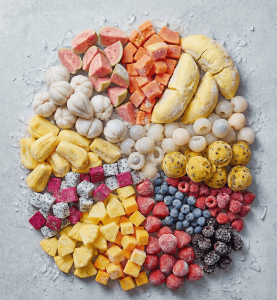
Vietnam offers frozen pineapple in formats such as tidbits, chunks, slices, rings, and crushed pineapple. Buyers should check variety, Brix, acidity, color, texture, and whether the product is intended for retail, foodservice, or industrial use.
Frozen Passion Fruit
Vietnam is a relevant origin for frozen passion fruit pulp, puree, and juice cubes. Buyers should confirm whether the product is with seeds or seedless, the Brix/acidity range, packing format, and whether it is suitable for beverage, dairy, bakery, or industrial use.
Frozen Durian (The “King of Fruit”)
Frozen durian is an important export product from Vietnam, mainly for Asian markets and selected specialty buyers. Common formats include frozen segments, seedless pulp, and vacuum-packed meat. Buyers should confirm variety, odor control, packing, shelf life, and destination market rules.
Frozen Coconut & Banana
Coconut products can include IQF coconut meat strips, shredded coconut, coconut puree, or frozen young coconut water. Banana products can include IQF slices, coins, or peeled bananas for bakery, smoothie, and industrial use.
3. Main Frozen Vegetable Products from Vietnam
IQF Frozen Broccoli
Frozen broccoli may be available from selected Vietnamese suppliers, but buyers should check carefully whether the factory has stable raw material, correct floret sizing, blanching control, color retention, and export experience.
Frozen Edamame

Frozen edamame is available in-pod or shelled as mukimame. Buyers should confirm non-GMO status, MRL compliance, microbiological limits, blanching quality, size, packing format, and destination market requirements.
Frozen Sweet Potato & Taro
Sweet potato can be supplied as IQF fries, chunks, cubes, mash, or puree, depending on the factory. Taro is commonly supplied peeled and diced for foodservice, dessert, bubble tea, and industrial applications. Buyers should check variety, color, texture after cooking, and defect tolerance.
4. Technical Specifications Reference (2026)
Typical Buyer Specification Points
The values below are general reference points only. Final specifications should be confirmed by product, variety, season, factory, and buyer requirement.
| Product | Common formats | Main buyer checks | Typical packing |
|---|---|---|---|
| Frozen mango | Dice, slices, halves, puree | Variety, Brix, color, drip loss, cut size | 10 kg carton, retail bag, drum for puree |
| Frozen pineapple | Tidbits, chunks, rings, crushed | Brix, acidity, color, texture | 10 kg carton, retail bag |
| Passion fruit | Pulp, puree, juice cubes | With seeds/seedless, Brix, acidity, packing | Pail, drum, carton |
| Frozen durian | Segments, pulp, vacuum pack | Variety, odor control, shelf life, market rules | Tray, vacuum pack, carton |
| Frozen edamame | In-pod, shelled | Non-GMO, MRL, blanching, size | 500 g bag, 1 kg bag, 10 kg bulk |
| Frozen sweet potato | Fries, cubes, chunks, puree | Variety, color, texture after cooking | Retail bag, 10 kg carton |
| Frozen taro | Cubes, slices, puree | Color, texture, defect tolerance | Retail bag, 10 kg carton |
5. Common Processing & Packaging Formats
Which format should you choose?
IQF (Individually Quick Frozen): Best for retail and foodservice where “free-flowing” pieces are required.
Puree & Concentrates: Ideal for industrial frozen ingredients in the beverage and dairy sectors.
Retail Packaging: Stand-up pouches or zipper bags (500g, 1kg) with private label printing.
Industrial/Bulk: 10kg cartons with PE liners or 200kg steel drums for purees.
6. Export Documents and Certifications
What is required to clear customs for Vietnamese frozen produce?
To ensure food safety and tariff benefits, buyers must verify:
Mandatory Docs: Bill of Lading, Commercial Invoice, Packing List.
Phytosanitary Certificate: Phytosanitary or plant-health documentation depends on the product, processing level, HS code, and destination market. For the EU, plant-health rules are product-specific, and certain plants or plant products require a phytosanitary certificate. Buyers should confirm the requirement before shipment with the importer, customs broker, and relevant authority.
Certificate of Origin: Certificate of origin / proof of origin: Required when the buyer wants to claim preferential duty under a trade agreement such as EVFTA. For Vietnam to the EU, this is often EUR.1 or an origin declaration, depending on shipment value and conditions.
Food Safety Standards: BRCGS (Grade A/AA), HACCP, and FSSC 22000.
Compliance: MRL (Maximum Residue Levels) testing reports specific to your destination country.
7. How to Choose a Reliable Supplier in Vietnam
Direct Factory Control: Confirm the actual processing site, whether freezing is done in-house or subcontracted, and how the supplier controls the product from raw material to loading.
Raw Material Sourcing: For products where planting area codes or farm records are relevant, confirm the raw material source and traceability records.
Cold Chain Audit: Confirm a seamless -18°C chain from the freezer to the shipping reefer.
Sample Testing: Always perform a “defrost test” to check for drip loss and texture integrity.
- Check previous export markets, MRL testing ability, sample versus production matching, loading photos, temperature records, and complaint history.
8. Common Mistakes Buyers Make
Focusing Only on Price: A cheap IQF offer can hide quality problems such as ice or snow inside the carton, clumping, high drip loss after defrosting, broken pieces, inconsistent cut size, weak color, low Brix, or poor texture.
Ignoring MRLs: Pesticide regulations vary globally. Your supplier must test for your specific market’s limits.
Underestimating Lead Times: Raw material prices often move by season, so buyers should check the harvest calendar before fixing large volumes.
Conclusion
Importing frozen fruits and vegetables from Vietnam can be a strong option for buyers looking for tropical fruit products, selected vegetables, private label packing, and alternative sourcing in Asia.
The key is to qualify the supplier properly before the first order. Buyers should confirm the product specification, MRL compliance, freezing method, packing format, cold chain, documents, and real export experience for the destination market.
Looking for a quote? Contact Us Here For frozen fruit and vegetable sourcing inquiries, send us your product, cut size, packing format, target quantity, destination port, and required certificates. We will check suitable supplier options and current availability.
FAQ: Common Questions About Frozen Fruits and Vegetables
Q: Are frozen fruits and veggies still healthy?
A: Yes. In fact, IQF technology locks in vitamins and minerals at the peak of ripeness. Vietnamese fruits are often frozen within hours of harvest, which preserves more nutrients than fresh produce that spends days in transit.
Q: What vitamin is destroyed by freezing?
A: While most nutrients remain stable, Vitamin C and some B-vitamins can be slightly reduced during the blanching process (briefly heating vegetables to stop enzyme activity before freezing). However, the remaining levels are typically higher than “fresh” produce stored at room temperature for a week.
Q: What six fruits should you always buy frozen instead of fresh?
A: For importers and manufacturers, the best fruits to source frozen are:
Mango: Maintains texture perfectly in IQF form.
Berries/Strawberries: Often higher in antioxidants when frozen at peak.
Pineapple: Eliminates the labor of peeling and ensures consistent sweetness.
Dragon Fruit: Extremely convenient for smoothie bowls and purees.
Passion Fruit: Frozen pulp is much easier to transport than fresh fruit.
Durian: Freezing is the only viable way to export the “King of Fruit” globally while maintaining quality.
Q: Is it okay to eat frozen veggies every day?
A: Absolutely. Frozen vegetables are a convenient, cost-effective, and nutritious way to meet daily dietary requirements. They are picked at their nutritional peak and contain no added preservatives.
Q: What is the king of fruit in Asia?
A: The Durian is widely known as the “King of Fruit.” Vietnam is currently a leading exporter of frozen durian, offering a way for global buyers to enjoy this premium fruit year-round without the logistical challenges of fresh shelf-life.
Q: Are there any downsides to eating frozen fruit?
A: The only primary downside is a slight change in texture once thawed, which makes them less ideal for raw salads but perfect for smoothies, baking, yogurt, and industrial food manufacturing.